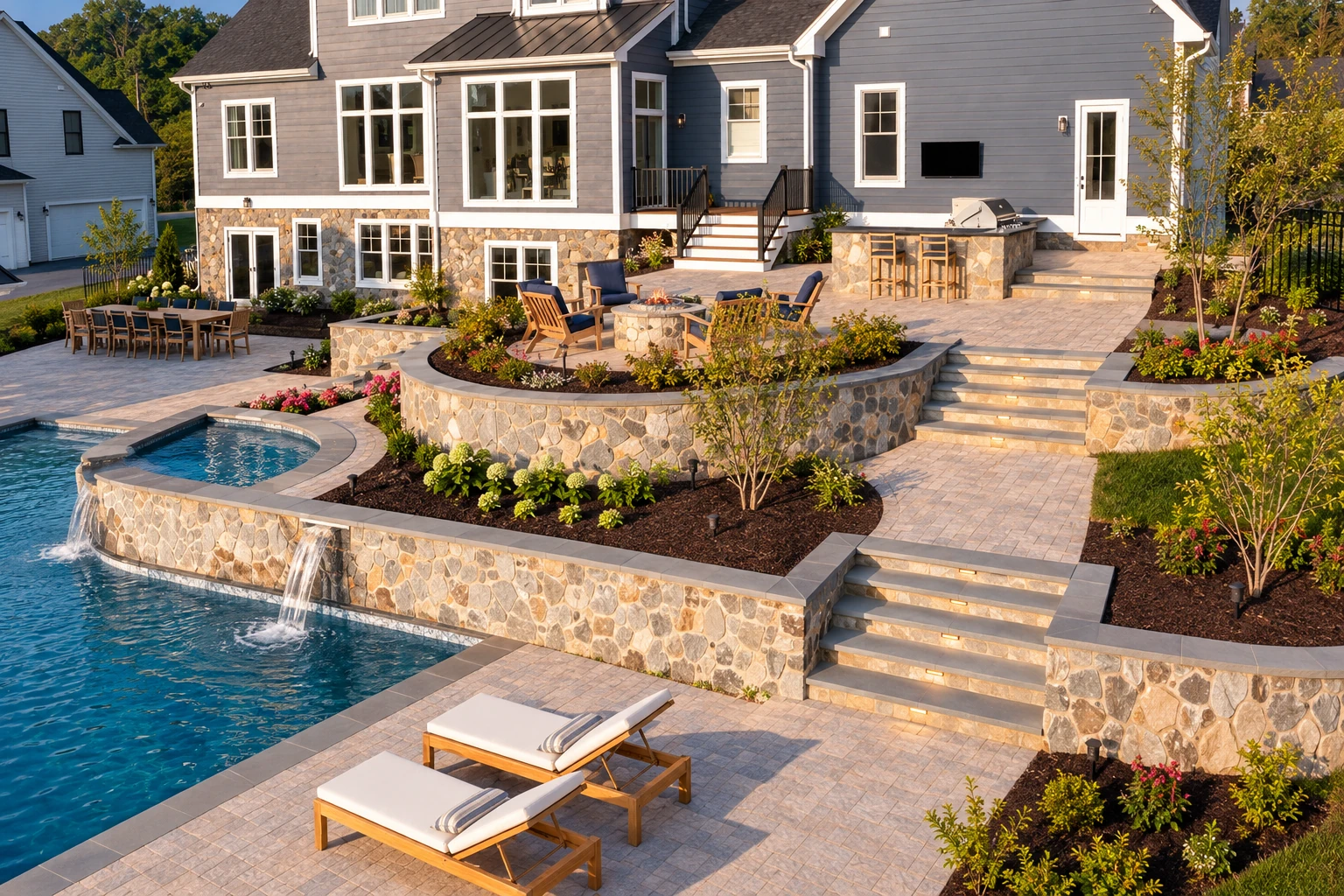
Retaining wall construction in San Jose, CA - a wall that drains and stays put
Slope creeping onto the patio or a yard too steep to use? We build retaining walls that drain and hold the ground level.
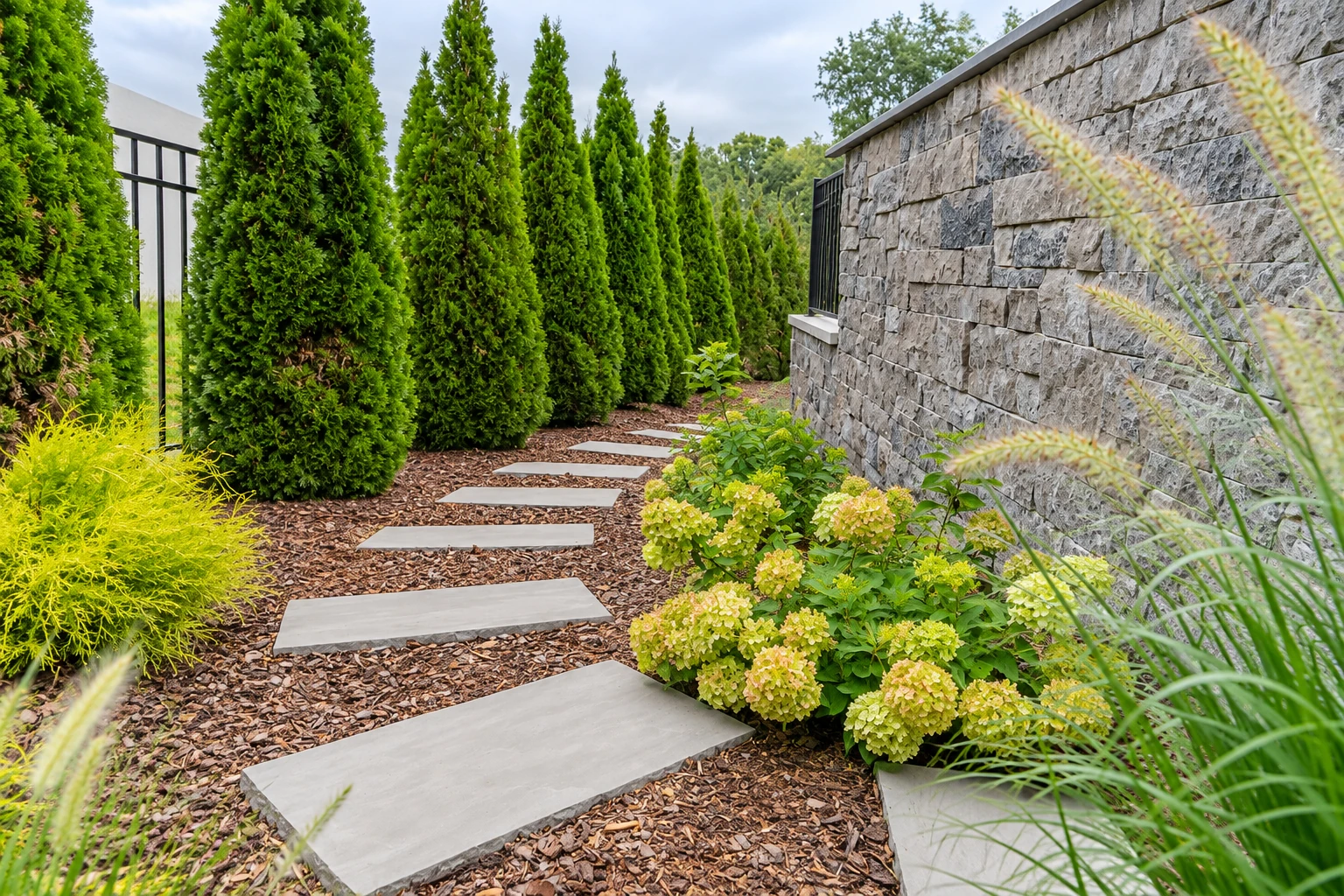
What goes into building a retaining wall here?
Retaining wall construction in San Jose means digging out and grading the slope, then building a wall that holds back the earth behind it, so you get level ground you can use and soil that stays where it is.
Most people call us about a slope that's sliding onto a patio, a backyard too steep to use, or an old wall that's started to lean. What moves the price is the wall's height and length, the material, how much soil has to come out and how much drainage the site needs, and what moves the schedule is mostly the city permit and the time of year. We're based in San Jose and work across the city and the cities around it, and once I've seen your slope, your estimate lays out what I found and what we'd do about it.
How our retaining wall construction works
We plan where the water goes before we plan the wall, because a wall that can't drain is a wall headed for trouble. So I start by looking at where rain reaches the slope and where it can leave, and once the permit is in hand we mark the line, dig down to firm ground and pack a gravel base so the first course sits level. We build the wall up course by course, set clean drain rock and a perforated pipe behind it to carry water to an outlet, then backfill in layers and compact each one so the soil doesn't settle against the wall. You'll see that drainage spelled out in the estimate, not just the block.
A new wall often sits beside older masonry, and if a garden wall or brick steps next to it are crumbling, our masonry restoration work repairs them with a mortar that suits the old brick. If the reason for the wall is a flat patio for an outdoor fire, our fireplace installation work can be planned in from the start.
Interlocking concrete block
Dry-stacked units that lock together suit most backyard walls, because they go up without mortar and the open back fills with drain rock. They're the usual pick when you want a clean, even face at a fair cost.
Block on a footing with a finished face
A mortared block wall on a concrete footing suits walls near the house or ones that need to look finished, since we can face it with stone veneer or stucco. It takes more steps, so it costs more than stacked block.
Natural stone
Stacked or mortared stone suits garden walls that are meant to be looked at, and it sits well beside older brick homes. Fitting stone takes more labor than setting block, which shows in the price.
Retaining wall construction in San Jose: permits and ground
Before anyone digs, the City of San José requires a Notice of Exemption or a Grading Permit for any retaining wall, so we check with the city's permit office first, apply as the licensed contractor and meet the inspector on site. If your lot sits in a mapped landslide or liquefaction zone, the city also has to give it a geologic clearance before it issues a grading or building permit, and that clearance may call for soils studies and steps to reduce the hazard. You can check with the city whether your lot is in one of those zones, and we'll ask about it as part of our permit check too.
On jobs around San Jose we usually meet clay soil that swells when it's wet and shrinks over the summer, and backyards that step up toward the hills, so we size the drain rock and pipe for winter rain rather than the dry months. We plan the same way for sloped lots on jobs in Los Gatos and Saratoga.
Retaining walls and terraced yards
Why call us for retaining walls
I measure your slope myself
I come out to look at the job myself and take the measurements, so the person pricing your wall has stood on your slope and seen where the water runs. That's how most surprises get caught before the digging starts instead of during it.
Our own masons, checked as built
Our own masons do the work, and I check it as it goes up, especially the drain rock and pipe before they're buried for good. The job is backed by our satisfaction guarantee.
Thirteen years of masonry work
We've been in business since 2013, and we're best known for careful work on older brick, which teaches you what water does to a wall over decades. We build every new retaining wall with that in mind.
Licensed and fully insured
We're licensed and fully insured, and that matters here because the city recommends a licensed contractor as the permit applicant, since whoever signs is responsible and potentially liable for all the work under it. With us applying, that responsibility stays with the people doing the job.
If you've got a slope that needs holding, send us the details with the wall's rough height and length, the slope behind it and a few photos, and I'll set up a time to come look.
(669) 234-3391Get your retaining wall measured and priced
We reply within one business day to set up a visit, and the estimate is free, on site and with no pressure to book. I walk the slope, measure it and take photos, then send you a write-up of what I found and what we'd build.
Retaining wall questions from San Jose homeowners
How much does a retaining wall cost in the Bay Area?
Retaining wall construction in the Bay Area usually costs about $25 to $65 per square foot of wall face, meaning the front of the wall measured height by length. Where a wall lands in that range comes mostly down to material, from boulders, wood or railroad ties to stone, poured concrete or interlocking block. Your own figure comes from the estimate, after I've measured the slope.
Can you build a retaining wall in San Jose during the winter?
Yes, but any grading in San Jose between October 1 and April 30 needs an approved erosion control plan from the city first. The rule keeps mud out of creeks and storm drains in the rainy months, so a winter start adds that plan to the schedule. If your timing is flexible, a spring or summer start skips that step.
What causes a retaining wall to fail?
Poor drainage is by far the most common cause of a retaining wall performing poorly, and left alone those problems can grow into outright failure. Water trapped behind a wall adds load, can wash soil out and weakens the ground around it. One design guide found that maintainable drains work more reliably than traditional weep holes, which are likely to clog over a wall's life. When you compare bids, ask each one where the water goes.
Is concrete block or wood better for a retaining wall?
For a wall you want standing for years, block is usually the better choice. A concrete block industry manual notes that block units resist cracking, while treated timbers and railroad ties can splinter and decay. Wood can cost less up front, and I'll tell you if a short garden edge is all you really need.
How long does it take to build a block retaining wall?
The building itself usually goes quickly, since the same block industry manual puts an experienced crew of three or four at about 300 to 500 square feet of block wall a day. Most of the calendar time comes before that, in the permit, any geologic clearance and the few days 811 needs to mark buried utilities before digging. I'll tell you which of those apply to your lot at the estimate.
What should I have ready before asking for a retaining wall estimate?
Have the wall's rough height and length, a sense of how steep the slope behind it is, and a few photos of the site. If water pools or runs across the yard when it rains, a photo of that helps most. I'll take my own measurements on the visit either way.
Talk to us about your retaining wall and drainage
Call (669) 234-3391 until 10 PM on weekdays or 9 PM on weekends, and we'll set up a time to see your slope.