Stone veneer installation in San Jose CA - a stone wall that dries out between rains
Old veneer stained and loose, or a plain wall you want faced in stone? We build the hidden layers so water behind it drains away.
What goes into a stone veneer wall that lasts?
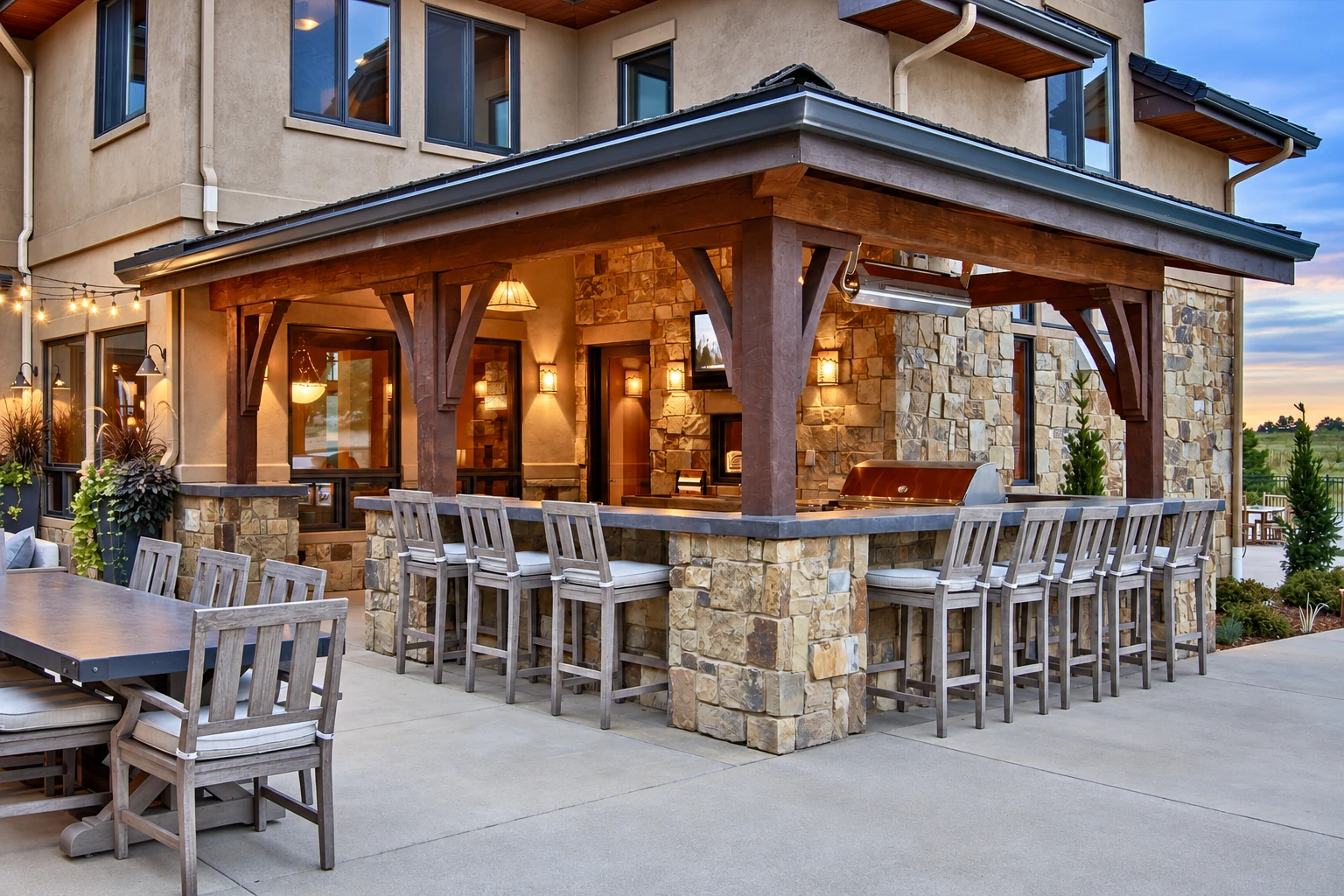
Stone veneer installation in San Jose covers a wall with natural or manufactured stone, set over a water-resistant barrier and a mortar scratch coat, the scored base layer the stone bonds to. The stone becomes the wall's outer skin, and the layers behind it carry off the water that gets past it.
Most calls about stone come from owners looking at a plain stucco or block wall they'd like faced in stone, or at older veneer that's stained or coming loose. The price moves with how many square feet you're covering, natural or manufactured stone, how many corners and edges there are, and how much the wall needs before the first layer goes on. The schedule turns mostly on that prep, on dry weather for the mortar coats, and on whether the city wants a permit for your wall. Your own figure comes from the estimate, where I measure the walls and write up what I found and what we'd do about it.
How we do a stone veneer installation
Most of what makes stone veneer last is hidden behind it, so we put as much care into the barrier layers, flashing and drainage as into the stone you see. We start by checking the wall underneath, because stone set over soft or rotted sheathing only hides the problem. Then we flash around windows and doors, set a weep screed at the base, a metal edge that lets water out at the bottom, and hang the barrier and metal lath with each piece lapped over the one below so water runs down and out. Our masons trowel on the scratch coat and let it firm up, then set the stone in mortar from the bottom up, fill and tool the joints, and clean the face before the mortar hardens.
Veneer often goes on a wall we've built ourselves. Concrete block walls around a yard or patio give stone a flat, solid base, and with foundation block wall installation the part that shows above ground can be faced in stone so it matches the rest of the house.
Natural stone veneer
Thin slices of quarried stone suit owners who want every piece to differ in color and grain, the way a solid stone wall does. The stone is heavier and harder to cut and fit, so it usually costs more to buy and to set.
Manufactured stone veneer
Cast stone made to look like the real thing suits owners who want a lighter, more even product with a wide choice of colors and shapes. The pieces are regular in size, which usually keeps setting time and cost down, though up close it won't vary the way quarried stone does.
Stone veneer installation in San Jose: permits and weather
Whether a veneer job needs a permit in San Jose isn't settled by the city's own list. San José's Permit Center issues building permits for altering walls or making any structural change, and its list names that work, not stone veneer, so the Permit Center is the place to ask about your wall. When a job does need one, we check with the permit office first, apply for it as the licensed contractor and meet the inspector on site. It's worth getting right, because the city notes that state law requires sellers to disclose unpermitted work and that insurance generally won't cover damage tied to it.
The city also now treats San Jose as a marine climate, and for stucco walls that means a drainage plane, a path for water to run down between the barrier and the stucco. That rule is written for stucco, not stone, but it points the same way we build veneer, with somewhere for water to go behind the face. We're based in San Jose and work across the city and the cities around it, and we see the same older stucco and block walls on jobs in Campbell and Santa Clara.
Stone veneer walls and details
Why call us for stone veneer
I check the hidden layers myself
I come out to look at the job and take the measurements myself, and our own masons do the work while I check it as it goes up. On veneer that matters, because the flashing and barrier disappear under the stone and nobody sees them again.
In business since 2013
We've been in business since 2013, and most of our calls come from owners of older homes with tired brick and mortar. That background is why I look at what a wall is made of and how it handles water before I put anything new on it.
Licensed and insured for stone work
We're licensed and fully insured, and California's contractor license board lists natural and manufactured stone among the materials a masonry contractor installs. You can look up any contractor's license there before you sign, which is worth doing on a job where the important work ends up covered.
On a veneer job, the part that counts most is the part the stone hides. When you're ready, request an estimate or call (669) 234-3391.
(669) 234-3391Get a written plan for your stone veneer wall
We reply within one business day to set a time, and I walk the wall, measure it and take photos. The estimate is free and on site, with no pressure to book, and you get a write-up of what I found and what we'd do about it.
Stone veneer questions from San Jose homeowners
How much does stone veneer installation cost per square foot?
Across the US, installing stone veneer usually costs about $25 to $40 per square foot. That's a national range for the installed work, not a San Jose price and not ours. Your own figure comes from the estimate, after I've measured each wall and seen what it needs underneath.
Why does drainage behind stone veneer matter so much?
Stone soaks up and holds water, so a veneer wall that faces rain and sun needs a way to drain and dry behind it. That's why the layers behind the stone deserve as much attention as the stone when you compare bids. On our estimates I write out what goes behind the stone, not just which stone.
How many layers of weather barrier should go behind stone veneer?
Two separate layers over a framed wall, according to one masonry trade association. The inner layer works with the flashing to form the drainage plane, the path water follows down and out, and the outer layer keeps the scratch coat off the inner one. Ask any installer whether their bid includes both.
Do I need a rainscreen behind stone veneer on my house?
A rainscreen is an optional step, so it's a choice you make with your installer. It's a narrow gap or drainage mat behind the stone that helps stray water drain out and shortens how long the wall takes to dry. I'll tell you which of your walls I think it's worth it on, and why.
What causes stone veneer to fail on some walls but not others?
Rain, mostly. One building scientist reports that veneer failures are concentrated on walls that get more rain, and that a lumpy, textured stone holds water in its nooks and stays wetter longer. If you know which side of your house takes the worst weather, point it out at the estimate so that wall gets the closest look.
How do I compare stone veneer bids in San Jose?
Look past the stone and ask what goes behind it. One building-science paper names a second layer of building paper, flashing and weep holes, small openings that let water out at the base, as ways to give the wall drainage, so ask whether each bid includes them. A bid that only describes the stone leaves you guessing about the part that matters.
Plan your stone veneer and the wall behind it
Call (669) 234-3391 with your wall's rough size and a few photos, and the first conversation can cover the stone and what goes behind it.